OnHollywood: The Weird Turn Pro

May 4th, 2007

Down in Hollywood
Better hope that you don’t run out of gas
Down in Hollywood
They’ll drag you right outta your car and kick your ass

The song “Down in Hollywood” by Ry Cooder (on iTunes, on Amazon) is going through my mind as I walk the famous street to the Roosevelt Hotel for the OnHollywood conference, hosted by Tony Perkins of AlwaysOn. I pass a homeless mental case screaming obscenities at the street itself, a cackling squad of middle-aged Japanese tourists counting the stars on the sidewalk, foreign-born shopkeepers muttering quietly as they sweep up last night’s party trash, hustlers peddling dope, hookers peddling sex, and scores of kids babbling and texting and probably Twittering with their mobile phones, oblivious to their surroundings. (And what are you doing right now?) At Hollywood and Highland I turn into the Roosevelt’s entrance clogged with casually dressed technofolk, mostly from Silicon Valley and San Francisco, mingling with a minority of suited finance types from both coasts and about a handful of Big Media moguls. Inside it is cool, dimly lit, and way too stylish for the streets outside — a virtual representative of “old Hollywood” reality. Arianna Huffington and Carson Daly are the most visible representatives of the professional media that have taken the plunge into blogging and video channeling; but the true stars are the geeks and weirdos that have turned professional.

This is a conference that featured, among many demonstrations of video delivery methods, social networks with video, and video blogging, a panel on whether new technologies are killing good writing. The younger generation is not reading anyway — they’re watching videos and creating their own videos, and expressing themselves in instant messages. Tony Perkins started the conference with a slide that indicated how badly the Boomer Generation “gets it” — while those under 30 spend far more time doing instant messaging than email, those over 40 are hooked on email and Big Media content (presumably those between 30 and 40 maintain some kind of balance, maybe even a life). Even those over 40 who “get it” always seem to fall back on sports — scores, live games, stats, etc. — as the best example of how people will use streaming video on their mobile phones. Perhaps this reflects the male-dominated high-tech industry with its full-court-press attitude. All I know is, as a man over 50, after seeing that slide I’ve been haunted by the youth market. (And yes, those that are not busy being born are busy dying.) And I figure that if anyone can find a way to bring Boomers into this new media explosion, the advertising dollars will flow more freely. Why? Because the Boomers have more purchasing power than the teenagers.

Big Media has stalked teens for their pocket change as far back as Elvis. And now, as scary as it may seem to Clueless Boomers to have hundreds of new video distribution methods and millions of “channels” of video, it is much scarier to Big Media (most of which is run by Boomers), and Big Media is indeed running out of gas. Less people are watching TV, even less are watching the ads on TV. User-generated video, if not actually affecting the advertising revenue of broadcast networks and cable TV, is at least putting the scare into Big Media. It seems ludicrous that a geek like Justin Kan, broadcasting his entire life 24×7 using a webcam strapped to his head (Justin TV), is intimidating to Big Media, but Justin was there, at OnHollywood, almost as big as the other new Web 2.0 brands. And marketers are awaking to the opportunity to not only target advertising better to specific audiences, but also to track how well the ads are doing — something television networks can’t provide.

(In fact, finer measurements of the TV audience’s view of ads, proposed year after year by Nielsen, has been quietly ignored, according to Blake Krikorian of Sling Media, because TV networks don’t want advertisers to know how ineffectual the response really is. And while it is possible to put the Nielsen codes in videos that appear on various TV networks so that the Nielsen boxes measure responses, the information advertisers get is idiosyncratic to the network — Comcast’s data is different than data from other networks. Sorting through these different data sets to determine an ad campaign’s response is a business intelligence problem that advertisers haven’t addressed.)

The conference served to point out not only how unconnected Big Media really is to the buying public, but how irrelevant they seem to be to the new Web 2.0 companies. The one panel that featured the Big Media moguls had the attendees leaving in droves for the schmooze lounge. Funny thing about that: the techno people are terrible schmoozers. The social media nerds are not very sociable! Nor do they pay attention to the panels. They’re more interested in the instant comments from the new global “peanut gallery” attending the conference from the computers far away — the chat room, on display next to the speakers. Everyone laughed not when Carson Daly told a joke about having bad hair on stage for the world to see, but when someone out in the world commented back that Carson’s hair looked fine. We are giddy with what technology can do, but since we haven’t mastered social connections in the real world, how can we possibly make them work in the virtual?

Andrew Keen in his blog, the Great Seduction (”Virtual reality in Hollywood“), has this to say (which neatly sums up the mood of the conference):

This surreal panel [”What’s in store for Virtual Worlds?”] was held in a room named the “Cinegrill” in the basement of Hollywood’s historic Roosevelt Hotel. After a few minutes of virtual reality talk, I began to look around the room. There must have been around fifty people in the audience — digital entertainment executives, Hollywood wannabe moguls, media journalists, bloggers, posers like myself. Only three of them (and I counted, I promise) were looking at the four executives up on the stage of the Cinegrill. The others were peering at their electronic toys — laptops, BlackBerries, phones, Treos. Nobody was paying attention to what was happening in the Cinegrill. Everyone had been consumed by their screens.

And yet, just about everything at the conference was interesting — possibly because it was limited to the top 100 companies that AlwaysOn’s judges believe are tops in the field. This “hit list” of 100 companies include some brand names like Gracenote and Sling Media (which is number one on the list). YouTube was on it last year. Here are some new services that struck me as really interesting, and I’ll be covering more over the next few weeks:

  • Start your own video channel with me.tv. The service packages a .TV domain purchase with pre-designed themes and easy-to-use video management tools. Channel “broadcasters” can browse top video sites and with a single click grab embed code and links for their favorite videos, allowing for quick and easy programming of their own .TV channels. Each .TV channel is its own social networking site with private or public profiles, blogs, message boards, on-site messaging, user ratings, favorites, friends lists, comments, and photo albums. MTV VJ Carson Daly opened the OnHollywood conference with his new .TV channel.
  • BlogTalkRadio lets bloggers add a live talk show to their blogs, with live interaction over the Internet. Listeners can call the host during the blogshow using any phone, whether it be a landline, mobile, VOIP, soft phone, etc., or visit the blog and use their favorite instant messenger client. Free to bloggers, the service plans to put advertising in the shows and share revenues with bloggers.
  • Cozmo.TV lets you build your own video channel, but it also helps you time-shift television content and search by keywords. If you are familiar with scheduling your TiVo today online through TiVo Central or Yahoo!, you basically get the same functionality with Cozmo. Like TiVo, Cozmo will offer a wide variety of categories to browse from: history, documentary, science fiction, etc. and have full search capability. Even more interesting is the ability to tag television content with keywords, to make content discovery easier.
  • Joost is already putting TV shows on the Internet for anyone to watch; the fact that it started with reruns is no surprise but this trend is seriously catching on, with mobile phones the next medium for watching these shows.

As I left the Roosevelt bound for Burbank, the same kids were still Twittering on the sidewalk, the Japanese tourists had moved on to the Chinese Theater, the junkies crowded around the hustlers, more hookers were flaunting more booty, and the homeless mental case was still screaming obscenities at the street. Nothing had changed except people at the conference left feeling a bit more anxious, and virtual reality was beginning to look promising as the only escape.

Stay tuned — same iTimes blog, same iTimes channel…

Ry Cooder - Bop Till You Drop - Down in Hollywood

Apple iTunes

Apple Store

‘Scuse Me, While I Kiss This Guy

April 24th, 2007

Yes, and “Doughnuts Make Your Brown Eyes Blue”, “There’s a bathroom on the right”, “The girl with colitis goes by”, and “Good collie, Miss Molly”!

May you never suffer such mondegreens again. As reported by Michael Liedtke of Associated Press, Yahoo is set to unveil what it calls the Web’s largest legally licensed database of accurate lyrics — 400,000 songs properly licensed from their publishers. While you can find lyrics on other Web sites, many of those sites are technically breaking copyright law by posting the words without the approval of the copyright holders. Many are also inaccurate due to relying on submissions from the world at large rather than licensing the actual published lyrics.

According to other reports including Reuters (brought to us courtesy of CNET News.com), Gracenote, the company that developed the CDDB and technology used in iTunes that automatically recognizes the tracks on compact discs, led the way by putting together the database and licensing deals. Yahoo will share with copyright holders the revenue from the ads that will be displayed alongside the lyrics. Most of the largest music publishers are part of the nearly 100 publishers that contributed lyrics, including BMG Music Publishing, EMI Music Publishing, Sony/ATV Music Publishing, Universal Music Publishing Group and Warner/Chappell Music.

Yahoo doesn’t actually integrate these lyrics with iTunes or your iPod — to do that today, you need a utility such as Canto Pod from staylazy, which is now available for Mac OS X as well as Windows. It grabs song lyrics from a different database of over 200,000 songs (Leo’s Lyrics) and lets you copy the lyrics to your iPod’s Notes section as well as to the song information (Lyrics tab) in iTunes. The new version is popular among Mac users — on April 16th, Canto Pod was approved on Apple’s Widget Download website, placed as a staff favorite, and downloads have skyrocketed according to staylazy. But  I wonder how long they can stay lazy with Leo now that Yahoo is in the game. But Canto Pod is coolio — its iTunes Song button lets you search for lyrics while listening to a song, without having to type anything.

I expect that a deal with iTunes will emerge in the near future that will use Gracenote’s technology to put the lyrics where they belong: in the iTunes song information field for lyrics. Someday soon you will see all kinds of utilities and iTunes features involving lyrics.

Apple iTunes

Apple Store

You Know My Label, Look Up My Songs

April 10th, 2007

So you want to upgrade EMI-labeled music you purchased from iTunes to the higher-sonic-quality versions without copy protection (when they become available in iTunes next month)?

Mac user? Try the tip “HOWTO: Another way to find EMI songs on your computer” by Erica Sadun. Missing from the instructions: the “Other” menu choice is available if you click the Kind button in the Find dialog. Unfortunately this tip works only for Mac OS X users.

What about Windows PC users? Windows XP search doesn’t let you search with such detailed attributes as you can with Mac OS X. I haven’t found any tips out there for searching Windows iTunes libraries properly (other than using iTunes itself).

Of course, there is also the problem that EMI includes other record labels. What of those songs whose copyright information lists one of EMI’s labels, like Capitol, instead of EMI? (Here’s a list of EMI labels. Good luck with that.)

All of which leads me to suspect that Apple will provide a way to search your iTunes library for purchased songs by specific labels. Perhaps EMI will promote this new capability through the iTunes store. Something has to give, here — EMI wants to make money on these upgrades, and Apple wants to see DRM-free music succeed. Look for this new capability shortly.

Apple iTunes

Apple Store

Take a Sad Song and Make it Better

April 3rd, 2007

Apple has taken a sad song — the copy restrictions on its music — and made it better by removing the Digital Rights Management (DRM) protection for its high-quality music format in a deal with record giant EMI.

The news (see “EMI, Apple partner on DRM-free premium music” by Caroline McCarthy of CNET News.com) is that Apple will sell songs in a higher-quality audio format from its iTunes online store, at a higher price ($1.29 per song), without DRM. The songs will play on any computer and any digital-audio player. Entire albums and individual songs will be available in this higher-quality, non-DRM format, but they will not replace DRM-protected songs currently sold through iTunes at the older price ($0.99 per song). That way, consumers have a choice. And for those who’ve already purchased DRM-protected EMI songs at 99 cents apiece can upgrade them to the new format for 30 cents apiece. Steve Jobs suggested that half of iTunes’ music tracks will be available in both DRM-loaded and DRM-free form by the end of 2007.

According to The New York Times (”EMI Dropping Copy Limits on Online Music” by Thomas Crampton), Steve Jobs is responding to an attack on iTunes in Europe. Mark Mulligan, a London analyst at the research firm Jupiter, was quoted: “Jobs was clearly here in Europe to send a strong message to the discontent in Norway and the French parliament.” Jobs emphasized how much the music labels have benefited from sales through iTunes. “ITunes has brought more than $1 billion in revenues to the record companies at no additional cost to them. Everybody wins here.”

Indeed, everyone wins and especially Apple as it retains its control over the online music market. As I wrote before (see “Splendid Time is Guaranteed For All“), the online music industry will change dramatically for the better when the Beatles started selling their songs online, through iTunes — which is undoubtedly the direction Apple Corps (the Beatles label) is heading (see “Apple and Apple Give Peace a Chance“). I also noted before (see “Let It Be… Naked (Without DRM)“) that stripping DRM from songs removes the barrier to freely using the music you own on different players. The connection was not so obvious until Apple made its first non-DRM deal, with EMI, the record label that controls a vast quantity of classic rock from the Rolling Stones, Pink Floyd, and yes, the Beatles (by distributing for Apple Corps).

Conspicuous by its absence from this deal is the Beatles catalog. EMI’s digital catalog does not yet include the Beatles — the label has the rights to the group’s recordings on CD, but the Beatles’ record company, Apple Corps, has not yet granted digital rights. When this happens, I expect to see another fanfare of news stories that will add yet another boost to this DRM-less higher-quality format.

Amazingly, EMI’s research showed that higher-quality, DRM-free songs outsold its lower-quality, copy-protected counterparts 10-to-1. Apple is using a higher bit rate (256 kilobit-per-second) with the AAC format, so the files are larger — about the same size as the song files in my library from CDs, because I use the 256 kbps rate with either AAC or MP3 when I rip CDs.

Also amazing is how the record labels can still charge so much. An album of songs will cost about $13-$15 either on CD or in this new iTunes DRM-less format. However, with the CD you get a physical backup of the track at the highest quality, along with artwork, credits, and liner notes. This deal puts the profits back into music sales for EMI, if only by reducing the cost of making CDs and distributing them to stores at wholesale prices. But it may not change my buying habits — I just ordered Neil Young’s Live at Massey Hall (CD/DVD) on CD from Amazon rather than purchase it on iTunes. Classic rock is, well, classic, and I want the liner notes and the extra DVD in the package.
Apple Store

Apple TV Smokes the Competition

March 28th, 2007

I wrote recently about Apple’s strategy of building a platform around iTunes — a wireless multimedia home network that not only links together all your PCs and Macs and television/stereo systems using Apple TV, but also extends out to your car and to all your iPod and iPhone devices (see “The Mothers of Invention at Apple“).

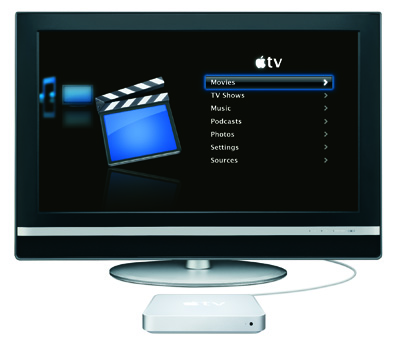
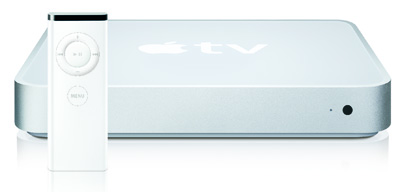
This is no pipe dream. Apple TV, shipping as of March 20, is a hardware node of this software platform — you synchronize it to your iTunes library, like an iPod. But the Apple TV box is capable of much more than its current features, which means Apple can extend the feature set pretty easily through updates to the onboard software. A clue that the Apple TV will someday sport digital video recording (DVR) functions has surfaced. In “Are There Plans For Digital Video Recorder Capabilities on Apple TV?” Carl Howe (Blackfriars Communications) submits that new Automator actions shipped as part of the Apple TV software include New Audio Capture, New Video Capture, Start Capture, Pause Capture, and Stop Capture. Automator is a system for automating workflows in Mac OS X.

The Apple TV hardware is not much different than a low-end laptop computer, and it runs a slimmed version of Mac OS X (for a peek inside, see AppleInsider’s coverage). Even though its USB port is “for diagnostics only” or something like that, Ozy from the AwkwardTV project has found a way to boot the Apple TV from an external USB drive attached to it, without opening the Apple TV case or removing the internal hard disk. Meanwhile, higher-capacity replacement internal drives are already available (see IResQ). The box has also been hacked to play xvid and WMV files, if you take a screwdriver to it and alter the contents of the internal hard drive. Joost (still in Beta testing) can run on Apple TV, according to the JoostTeam blog. Once Joost goes live, people can subscribe to unlimited TV shows.

Video-on-demand (VOD) operators must view Apple TV as a threat (see “How Apple TV Will Impact Operators” by Ian Fogg in Jupiter Research Analyst Weblogs), as Apple TV can provide on-demand HDTV content, as soon as the iTunes store begins stocking HDTV titles. Apple TV works with PCs and Macs transparently, taking advantage of whatever broadband connection you have; this gives Apple TV an edge over traditional VOD services that require additional broadband infrastructure. Competing products, such as the XBox 360, rely on Windows Media Center, and have very limited cross-platform capability.

Wildly expensive at $300, the Apple TV is nevertheless a consumer’s delight. Setting up the Apple TV is a breeze once you get the appropriate cables, which unfortunately are sold separately, adding about $40 to the price. See “Apple TV: An In-depth Review” by ars technica, and “MacRumors Review: Apple TV” by longofest for excellent reviews. Besides the fact that Apple TV is a smokin’ hot product, it’s also hot — about 110 degrees Farenheit at first, and even hotter when playing video (see “Apple TV is…hot!” by Erica Sadun).

Apple Store

iTunes 7.1.1 Fixes Wobble

March 18th, 2007

If you don’t already have it, you need iTunes version 7.1.1., which packs a lot of new features into the number one media player. As reported before, iTunes has been updated to accommodate Apple TV and provide full-screen cover browsing; incidentally, it doesn’t slam MusicMatch Jukebox against the wall anymore (see “iTunes Meets its MusicMatch“).

iTunes version 7.1.1 “addresses a stability issue and minor compatibility problems” according to Apple. Must have been that wobble in one of the wheels. Some Windows Vista problems have been fixed, but not all.

See my overview of iTunes version 7.1.1. features for a blow-by-blow description of cover browsing, managing multiple libraries, and using other new features of iTunes 7.1.1.

.Mac (Apple Computer, Inc.)

Tones for Joan’s Bones

March 15th, 2007

(With apologies to Chick Corea.)

In Japan, they’re wearing iPod shuffles in their headbands and preparing to go underwater. According to Electronista, the Japanese gadgetmaker Thanko has introduced a sports headband for MP3 players that uses bone conduction to play sound, making it suitable for waterproof listening applications (if you waterproof your iPod as well). It’s too soon to tell when this will hit our shores, but you can order them online directly from Thanko.

Bone conduction is a hearing aid technology that conducts “Good Vibrations” through the bones of your skull directly into your inner ear. Place a headset on your temple or cheek, and the electromechanical transducer, which converts electric signals into mechanical vibrations, sends sound to the internal ear through the cranial bones. Thanko had already released a conventional-looking pair of bone-conduction headphones, the Vonia EZ-4200Ps, which sits on your skull rather than on your ears — presumably so that you can listen to your iPod and hear everything else going on in the world, while also protecting your eardrums.

Scuba divers use waterproof bone conduction speakers — typically a waterproof rubber piezo-electric flexing disc attached to the temple. The sound can be surprisingly clear and crisp, though not in stereo, because the sound seems to come from inside your head. I withhold judgement until I get a chance to actually “hear” through them.

The Vonia headband offers a small pocket for holding the iPod shuffle. The wires are tucked inside the headband, and Thanko notes that Vonia owners can fit a waterproof guard on the bone conduction speakers to take the headband underwater. The compartment itself is not waterproof, so you need to waterproof your iPod shuffle. And yes, it is possible to waterproof an iPod shuffle — see the SwimMan’s waterproof iPod shuffle writeup in Engadget.

.Mac (Apple Computer, Inc.)

iTunes 7.1 Meets its MusicMatch

March 8th, 2007

So far there have been no reports of trouble with the iTunes 7.1 update. People are mostly thrilled by the full-screen CoverFlow feature for browsing by album covers. It doesn’t yet show the track information on the flip side of an album cover (as demonstrated by Steve Jobs on the iPhone) — that feature may come with the release of Leopard in June. Apple TV preferences are included in version 7.1, and QuickTime includes a setting for exporting to Apple TV.

But iTunes 7.1 is truly welcome in one corner of the universe — folks who use MusicMatch Jukebox for a variety of things while sharing the music library with iTunes. Some people prefer MusicMatch (MM as they call it) for ripping CDs, super-tagging songs to categorize them quickly, recording from other sources, and so on. Very early models of the first Windows version of the iPod was supplied with MM, before iTunes was developed for Windows. But this version of MM, and all subsequent versions, broke when iTunes 7 was released (see “Does Apple’s iTunes Disable the Competition?“). They wouldn’t work together — MM wouldn’t even open (some suspected a DLL conflict with the skinning or EQ sub-system). Uninstalling iTunes was the only “fix” but that meant losing the ability to update iPods.

MM folks have always felt unsupported; first by Apple, which abandoned MM without so much as an “aloha” and then by MusicMatch itself, which was purchased by Yahoo in 2004 and subsequently dropped out of sight. At some point before Yahoo bought it, the company lost the rights to distribute the iPod plug-in for MM and stopped developing or building fixes for iPod plug-ins. If you wanted to use MM and didn’t have the CD-ROM from Apple with version 7.5, you could still use version 8.1, which is still available from OldVersion.com, along with the iPod plug-in for MM, available from Version Tracker. MM recently re-emerged as Yahoo MusicJukebox, which is MM version 10.1.

Apple really didn’t have to fix this problem, but public outcry had already started. Apple tends to fix problems that hurt its image (unlike Microsoft). So MM users, rejoice, you can get back to super-tagging with MM. Good luck with that.

Thanks to Jay Schmitz, [email protected], for help with this story.

Apple Store

.Mac (Apple Computer, Inc.)

iTunes 7: Getting Better All the Time

March 5th, 2007

Apple this week released iTunes 7.1 for Mac and Windows. Besides providing support for the new Apple TV product, it now offers a new full screen Cover Flow and improved sorting options to let you decide how iTunes should sort your favorite artists, albums, and songs. Apple also released QuickTime 7.1.5 which delivers numerous bug fixes and addresses critical security issues.

Apple’s official word on Windows Vista support has been updated — to the effect that the Windows version of iTunes 7.1 addresses compatibility issues with Vista, but that Apple “is actively working with Microsoft to resolve a few remaining known issues.” Those issues have to do with ejecting iPods using the laughable Windows “Safely Remove Hardware” feature, displaying graphics incorrectly, and a lack of synchronization with Windows Address Book. Also, don’t expect iTunes to run on 64-bit editions of Windows, including Windows Vista and Windows XP x64. I covered some tips on getting around these problems in a previous entry.

iPhone Tips Revealed in Videos

February 26th, 2007

The video “Hidden Details from the iPhone Keynote” by Actioncorp.net on YouTube hints at future strategies for Apple and describes in detail some of the iPhone demonstrations Steve Jobs gave at the Macworld Expo keynote speech in January.

It describes the Calendar app, which Jobs did not demo (because it was not ready). It also shows Google Maps in action, but there were no directions, or traffic information yet, just buttons for these things. Scrolling by flicking a finger is cool, but there is also an alphabet for tapping on a letter to move directly to that section of a list.

The video narrator points to a Ringtones tab in the iTunes dialog for updating the iPhone, and surmises that Apple will soon be in the ringtone business, selling top-name artist ringtones through the iTunes store.

See The New York Times columnist David Pogue’s “The iPhone Up Close” video on YouTube for an excellent view of the Steve Jobs reality distortion field working overtime at Macworld. Fortunately Pogue adds helpful commentary and has edited the video down to the essential parts of the demo. At the end he adds his own experiences with using the demo unit.

CBS News did an interesting report from the Macworld show floor, posted on YouTube. “A Closer Look at the iPhone” by John Blackstone includes a detailed demo by Apple VP Phil Schiller, who describes the iPhone as “the best iPod we’ve ever made.” He gave a detailed demo of the cover flow feature, scrolling album covers just like in iTunes.

For a wonderful parody, see “SNL — Weekend Update iPhone Special” on YouTube, produced by the Sat. Night Live folks.

For those with iPods and iPhone envy, check out “iPod Firmware Update” by Gizmodo, also on YouTube. It shows the iPhone-like cover flow feature working on a standard iPod using the scroll wheel. Expect this update to come out soon.

Apple Store

.Mac (Apple Computer, Inc.)